Symbiosis
AR Community Public Art
Symbiosis
AR Community Public Art
"Co-Creation with Residents through AR: Designing and Experiencing Community Public Art"

INTRODUCTION
As a vital medium of contemporary community culture, community public art carries historical memory and collective emotions. However, in China, many public art projects are often dominated by a small number of cultural elites and institutions, resulting in limited actual participation by residents. Consequently, the value of art is not fully activated or communicated in everyday life.
"Symbiosis" is a public art installation based on augmented reality technology, extending and reconstructing the concept of traditional public sculpture. Through an interactive experience that blends the virtual and the real, the work transforms sculpture from a static conceptual object into a dynamic narrative medium. Augmented reality endows public art with new semantic dimensions, guiding people to re-examine the aesthetic and narrative potential of everyday spaces.
As a vital medium of contemporary community culture, community public art carries historical memory and collective emotions. However, in China, many public art projects are often dominated by a small number of cultural elites and institutions, resulting in limited actual participation by residents. Consequently, the value of art is not fully activated or communicated in everyday life.
"Symbiosis" is a public art installation based on augmented reality technology, extending and reconstructing the concept of traditional public sculpture. Through an interactive experience that blends the virtual and the real, the work transforms sculpture from a static conceptual object into a dynamic narrative medium. Augmented reality endows public art with new semantic dimensions, guiding people to re-examine the aesthetic and narrative potential of everyday spaces.
As a vital medium of contemporary community culture, community public art carries historical memory and collective emotions. However, in China, many public art projects are often dominated by a small number of cultural elites and institutions, resulting in limited actual participation by residents. Consequently, the value of art is not fully activated or communicated in everyday life.
"Symbiosis" is a public art installation based on augmented reality technology, extending and reconstructing the concept of traditional public sculpture. Through an interactive experience that blends the virtual and the real, the work transforms sculpture from a static conceptual object into a dynamic narrative medium. Augmented reality endows public art with new semantic dimensions, guiding people to re-examine the aesthetic and narrative potential of everyday spaces.
BACKGROUND
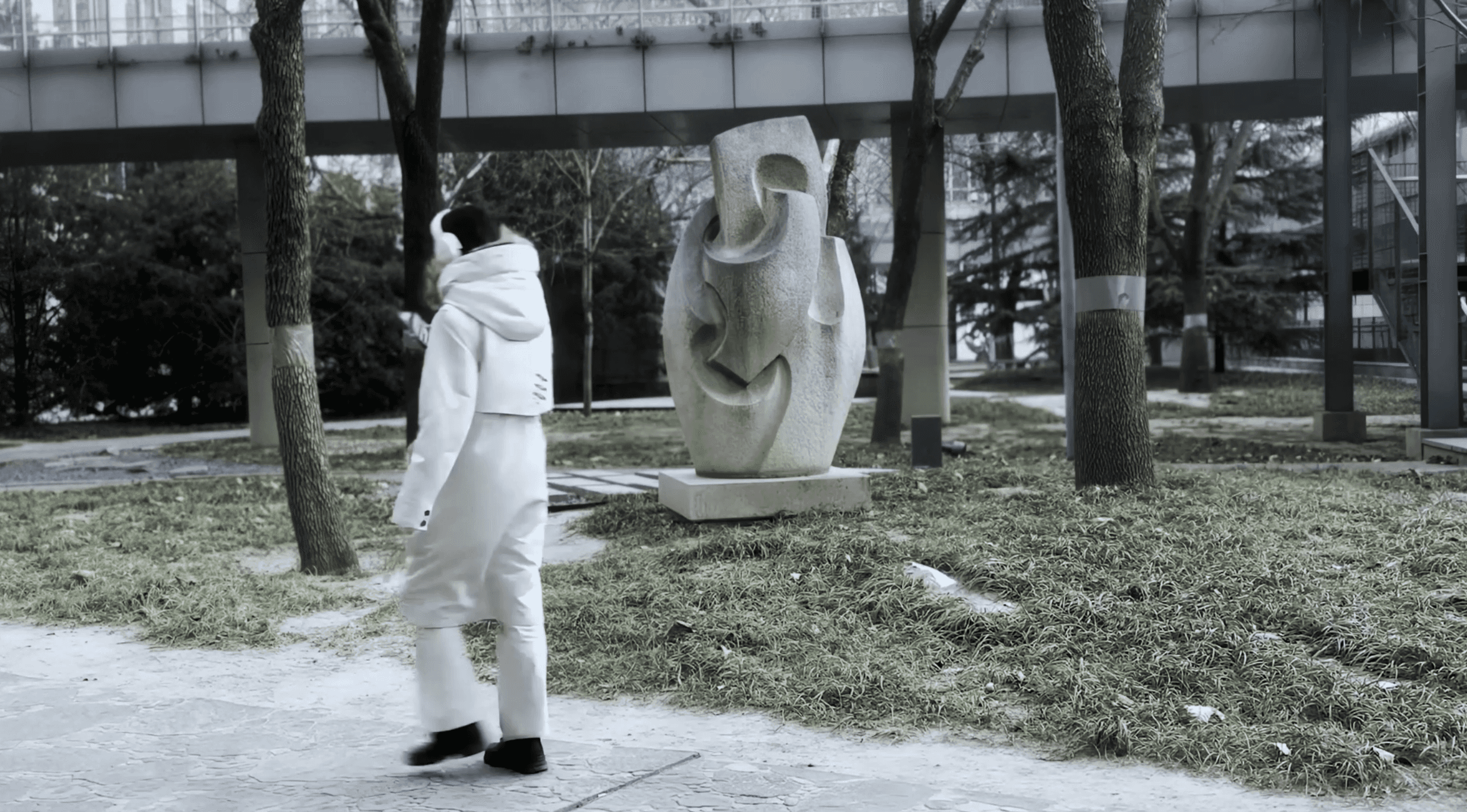
Community public art is a new form of public art that emphasizes public participation in the creative process rather than merely showcasing artistic outcomes. “Qi He” is a granite sculpture created by sculptor Chen Xiaoting. Preliminary research revealed that many community residents found it difficult to understand its abstract meaning and showed little willingness to engage with it. “Symbiosis” digitally reweaves the spatial structure and semantic logic of “Qi He”, serving as a regenerative attempt based on the concept of “co-presence.” It enables art to continuously “grow” within everyday community spaces, thereby extending its social significance.
Community public art is a new form of public art that emphasizes public participation in the creative process rather than merely showcasing artistic outcomes. “Qi He” is a granite sculpture created by sculptor Chen Xiaoting. Preliminary research revealed that many community residents found it difficult to understand its abstract meaning and showed little willingness to engage with it. “Symbiosis” digitally reweaves the spatial structure and semantic logic of “Qi He”, serving as a regenerative attempt based on the concept of “co-presence.” It enables art to continuously “grow” within everyday community spaces, thereby extending its social significance.
Community public art is a new form of public art that emphasizes public participation in the creative process rather than merely showcasing artistic outcomes. “Qi He” is a granite sculpture created by sculptor Chen Xiaoting. Preliminary research revealed that many community residents found it difficult to understand its abstract meaning and showed little willingness to engage with it. “Symbiosis” digitally reweaves the spatial structure and semantic logic of “Qi He”, serving as a regenerative attempt based on the concept of “co-presence.” It enables art to continuously “grow” within everyday community spaces, thereby extending its social significance.
WORKSHOP
Workshop is an important practical method in community public art. Through face-to-face communication and interaction, they inspire residents to express their expectations and imaginations regarding public art. I organized seven public art workshops to collaboratively explore renewal proposals for “Qi He” with community residents.
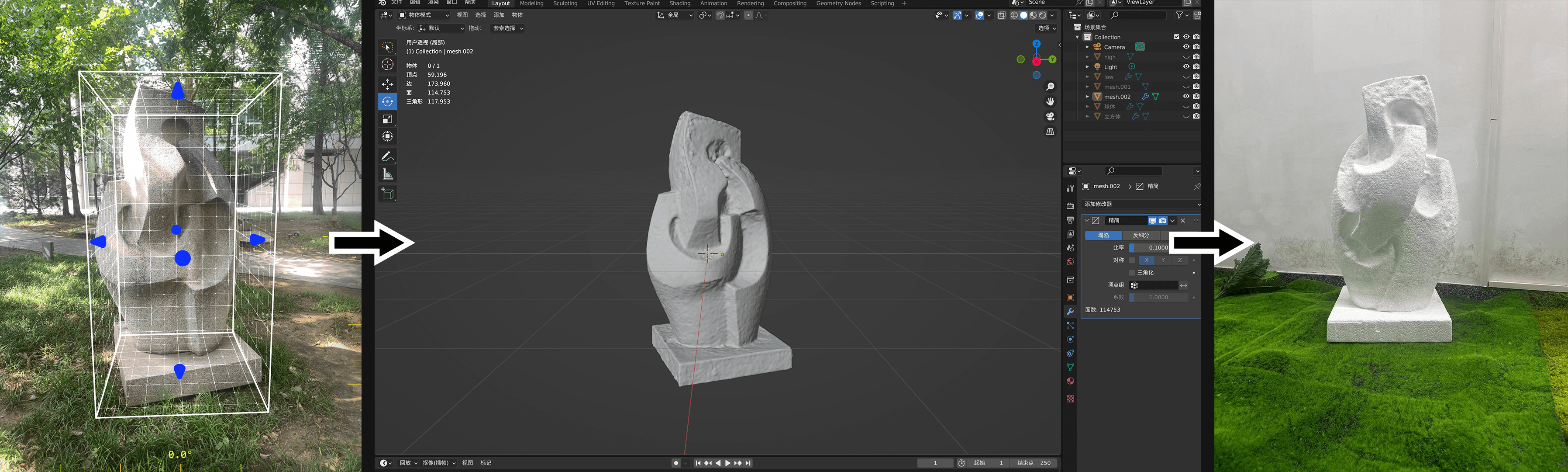
Using high-precision 3D scanning technology, I digitally modeled and optimized the sculpture. Based on the digital model, I produced an EPS prototype at approximately a 2:1 scale using laser engraving, laying the foundation for subsequent augmented reality–based narrative and interaction design.
Workshop is an important practical method in community public art. Through face-to-face communication and interaction, they inspire residents to express their expectations and imaginations regarding public art. I organized seven public art workshops to collaboratively explore renewal proposals for “Qi He” with community residents.
Using high-precision 3D scanning technology, I digitally modeled and optimized the sculpture. Based on the digital model, I produced an EPS prototype at approximately a 2:1 scale using laser engraving, laying the foundation for subsequent augmented reality–based narrative and interaction design.
Workshop is an important practical method in community public art. Through face-to-face communication and interaction, they inspire residents to express their expectations and imaginations regarding public art. I organized seven public art workshops to collaboratively explore renewal proposals for “Qi He” with community residents.
Using high-precision 3D scanning technology, I digitally modeled and optimized the sculpture. Based on the digital model, I produced an EPS prototype at approximately a 2:1 scale using laser engraving, laying the foundation for subsequent augmented reality–based narrative and interaction design.
WORKSHOP
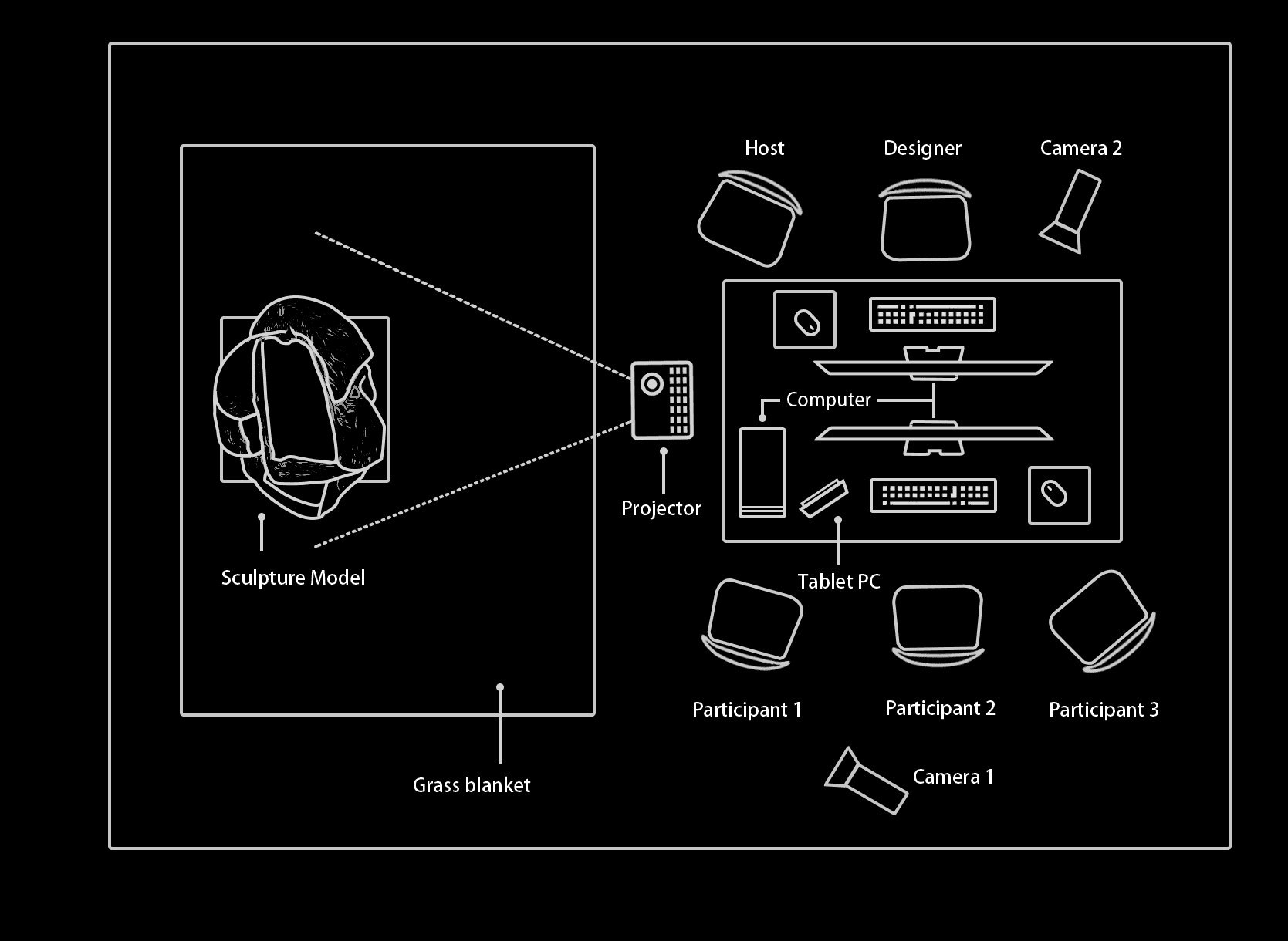
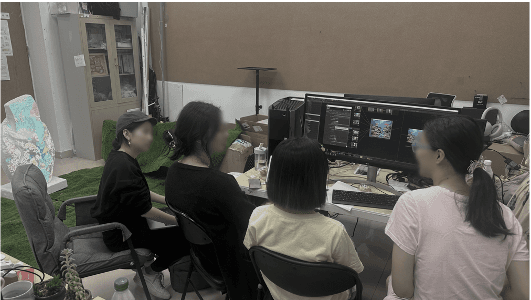
Each workshop consisted of five members, including two resident researchers and three community-recruited participants. By integrating AIGC (Artificial Intelligence–Generated Content) and spatial augmented reality technologies, the workshops empowered residents with the ability to create autonomously. Participants generated creative ideas through prototype design and projected their content onto the sculpture model in real time, allowing for intuitive preview and dynamic optimization of design outcomes.
Each workshop consisted of five members, including two resident researchers and three community-recruited participants. By integrating AIGC (Artificial Intelligence–Generated Content) and spatial augmented reality technologies, the workshops empowered residents with the ability to create autonomously. Participants generated creative ideas through prototype design and projected their content onto the sculpture model in real time, allowing for intuitive preview and dynamic optimization of design outcomes.
Each workshop consisted of five members, including two resident researchers and three community-recruited participants. By integrating AIGC (Artificial Intelligence–Generated Content) and spatial augmented reality technologies, the workshops empowered residents with the ability to create autonomously. Participants generated creative ideas through prototype design and projected their content onto the sculpture model in real time, allowing for intuitive preview and dynamic optimization of design outcomes.
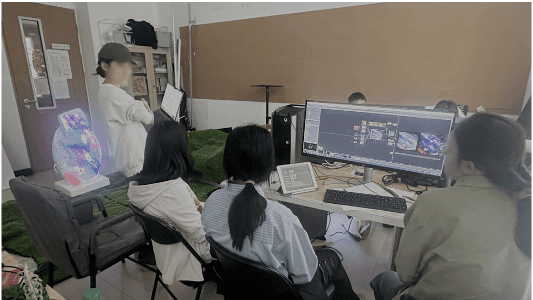
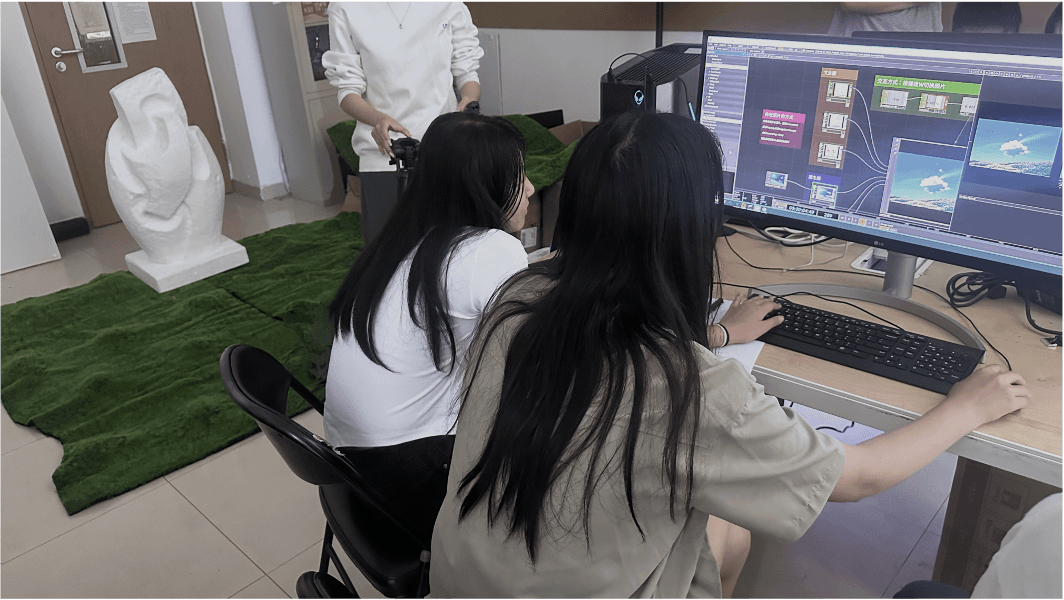
Each of the three community participants proposed an individual design theme during the workshops, and the group collectively selected the most satisfying proposal through discussion. After all seven workshops were completed, the resulting designs were subjected to a broader round of voting and comprehensive evaluation, ultimately leading to the selection of three final design schemes.
Building upon these outcomes, I further developed and refined the designs, striving to create works that resonate with residents’ cultural experiences in both form and content. The goal was to integrate community public art into the everyday environment, allowing it to serve as a vessel for collective memory and artistic expression.
Each of the three community participants proposed an individual design theme during the workshops, and the group collectively selected the most satisfying proposal through discussion. After all seven workshops were completed, the resulting designs were subjected to a broader round of voting and comprehensive evaluation, ultimately leading to the selection of three final design schemes.
Building upon these outcomes, I further developed and refined the designs, striving to create works that resonate with residents’ cultural experiences in both form and content. The goal was to integrate community public art into the everyday environment, allowing it to serve as a vessel for collective memory and artistic expression.
Each of the three community participants proposed an individual design theme during the workshops, and the group collectively selected the most satisfying proposal through discussion. After all seven workshops were completed, the resulting designs were subjected to a broader round of voting and comprehensive evaluation, ultimately leading to the selection of three final design schemes.
Building upon these outcomes, I further developed and refined the designs, striving to create works that resonate with residents’ cultural experiences in both form and content. The goal was to integrate community public art into the everyday environment, allowing it to serve as a vessel for collective memory and artistic expression.
Interaction Design
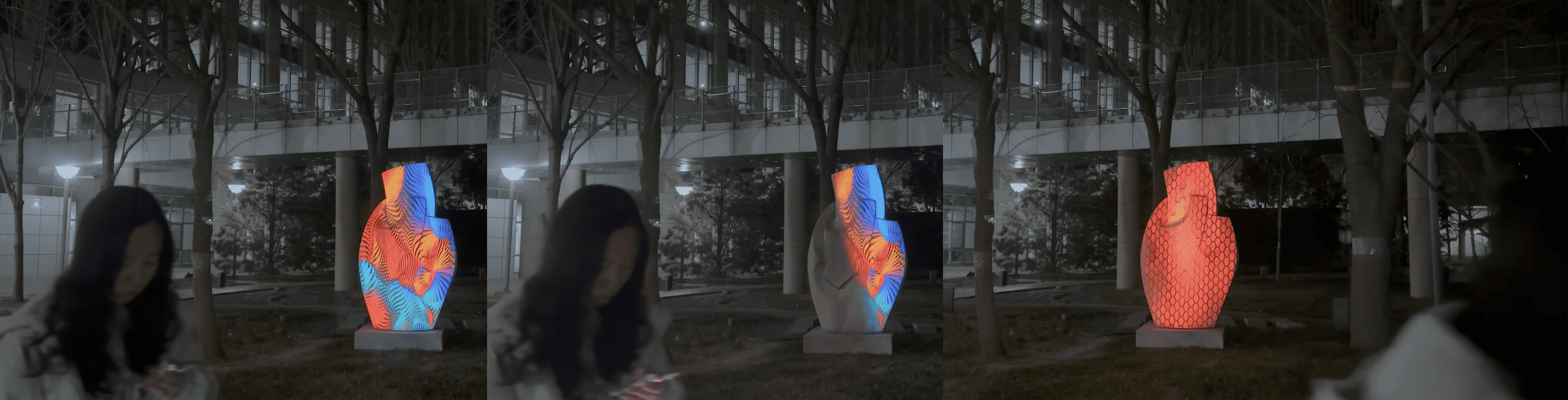
As a key medium of spatial augmented reality, 3D projection is often susceptible to occlusion—yet in this project, this very limitation is ingeniously transformed into an artistic language. When community residents pass by the sculpture, their shadows sweep across the projection surface, triggering shifts in theme and color, imbuing the work with a dynamic, breathing-like vitality.
This form of unconscious interaction does not interrupt the pedestrian flow, but instead draws attention through the fleeting play of light and shadow. It sparks curiosity and lays a sensory and situational foundation for deeper engagement with the installation.
As a key medium of spatial augmented reality, 3D projection is often susceptible to occlusion—yet in this project, this very limitation is ingeniously transformed into an artistic language. When community residents pass by the sculpture, their shadows sweep across the projection surface, triggering shifts in theme and color, imbuing the work with a dynamic, breathing-like vitality.
This form of unconscious interaction does not interrupt the pedestrian flow, but instead draws attention through the fleeting play of light and shadow. It sparks curiosity and lays a sensory and situational foundation for deeper engagement with the installation.
As a key medium of spatial augmented reality, 3D projection is often susceptible to occlusion—yet in this project, this very limitation is ingeniously transformed into an artistic language. When community residents pass by the sculpture, their shadows sweep across the projection surface, triggering shifts in theme and color, imbuing the work with a dynamic, breathing-like vitality.
This form of unconscious interaction does not interrupt the pedestrian flow, but instead draws attention through the fleeting play of light and shadow. It sparks curiosity and lays a sensory and situational foundation for deeper engagement with the installation.
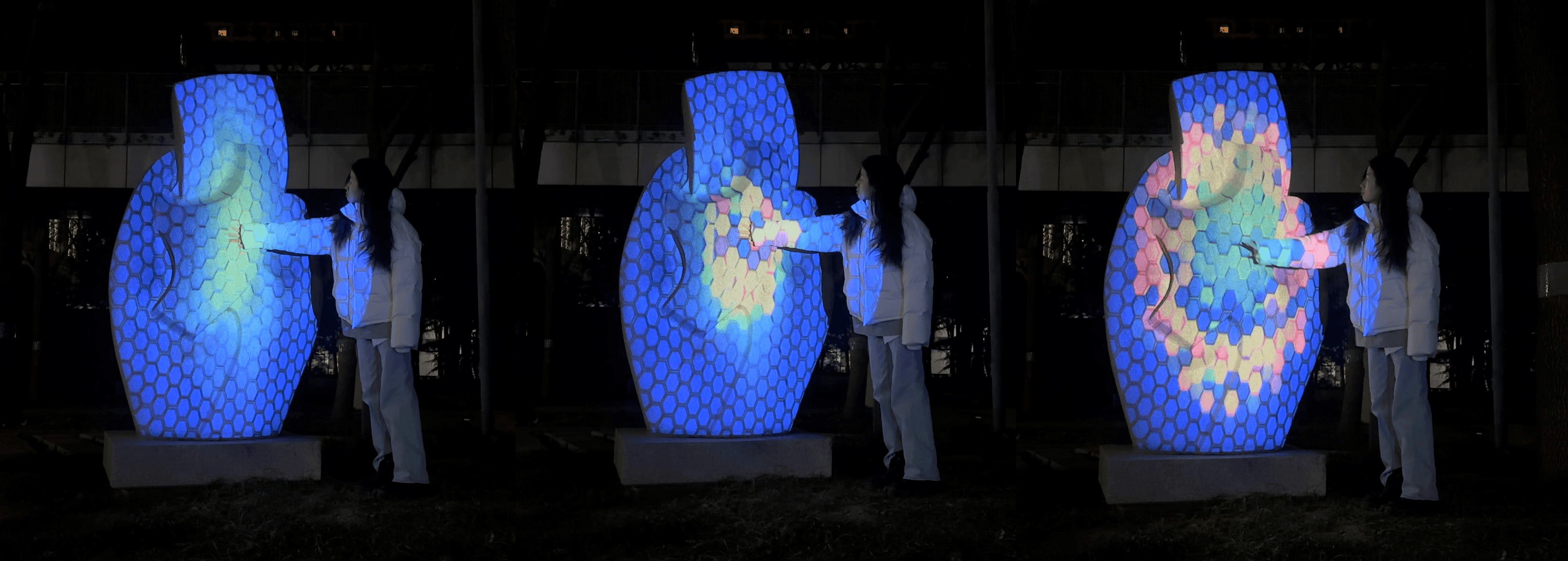
Touch serves as the core mode of interaction, transforming natural bodily contact into immediate visual responses and perceptual feedback. This imparts the work with a vivid and dynamic sense of life.
Such a body-based, intuitive interaction mechanism not only enhances users’ sense of control and immersion during the experience, but also allows public art to integrate into everyday community life in a more approachable manner—becoming a tangible, accessible, and co-creatable medium of cultural expression.
Touch serves as the core mode of interaction, transforming natural bodily contact into immediate visual responses and perceptual feedback. This imparts the work with a vivid and dynamic sense of life.
Such a body-based, intuitive interaction mechanism not only enhances users’ sense of control and immersion during the experience, but also allows public art to integrate into everyday community life in a more approachable manner—becoming a tangible, accessible, and co-creatable medium of cultural expression.
Touch serves as the core mode of interaction, transforming natural bodily contact into immediate visual responses and perceptual feedback. This imparts the work with a vivid and dynamic sense of life.
Such a body-based, intuitive interaction mechanism not only enhances users’ sense of control and immersion during the experience, but also allows public art to integrate into everyday community life in a more approachable manner—becoming a tangible, accessible, and co-creatable medium of cultural expression.
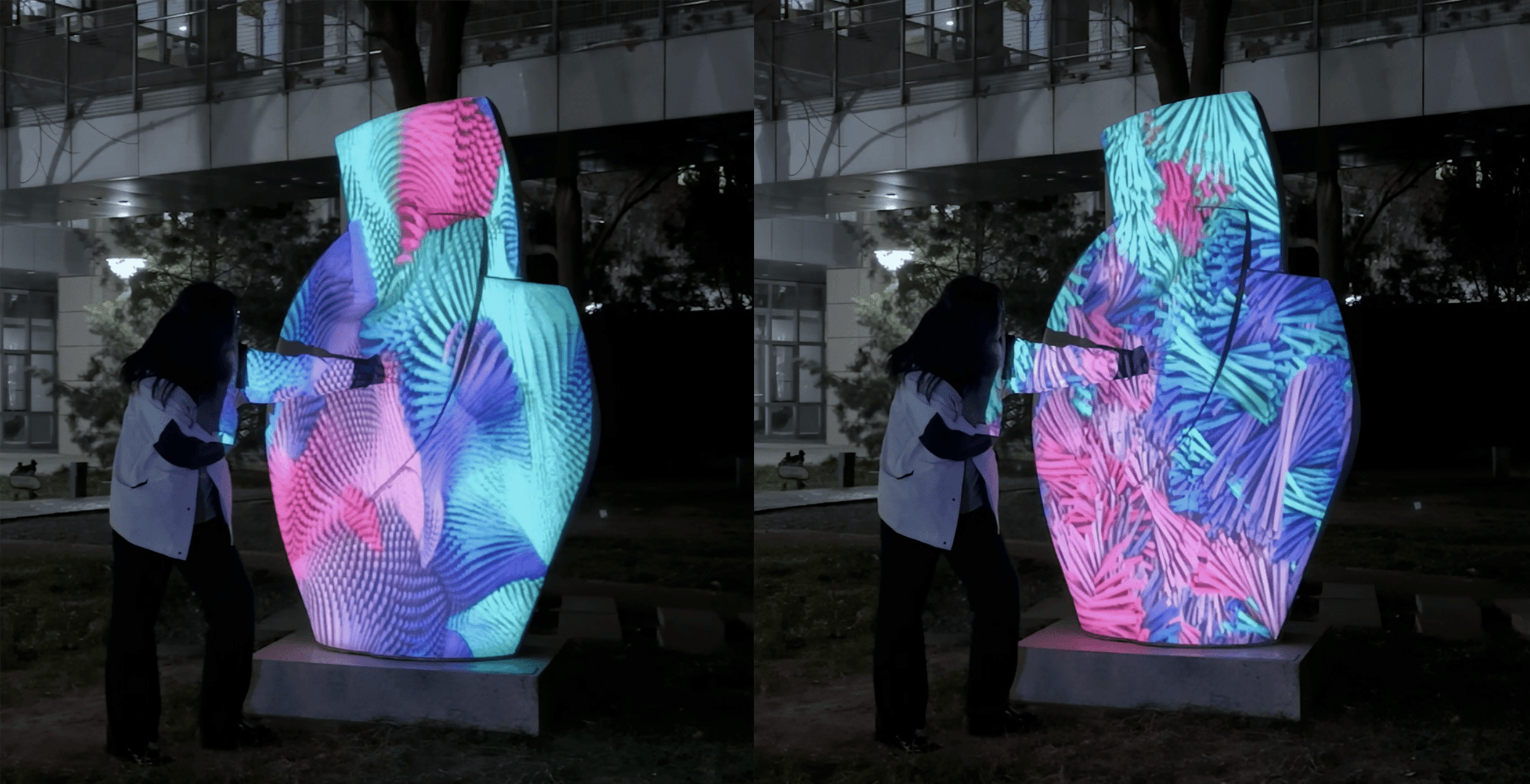
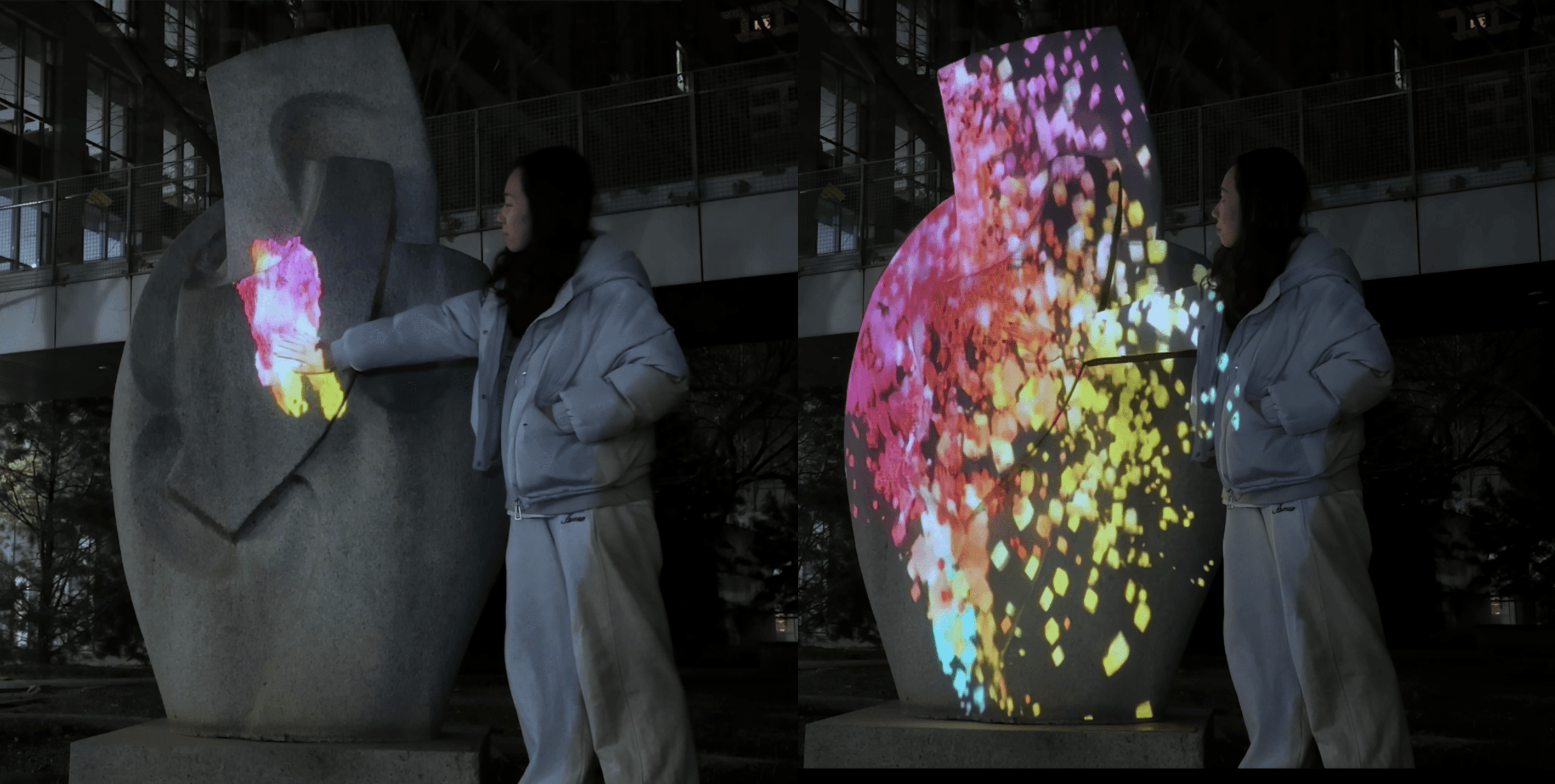
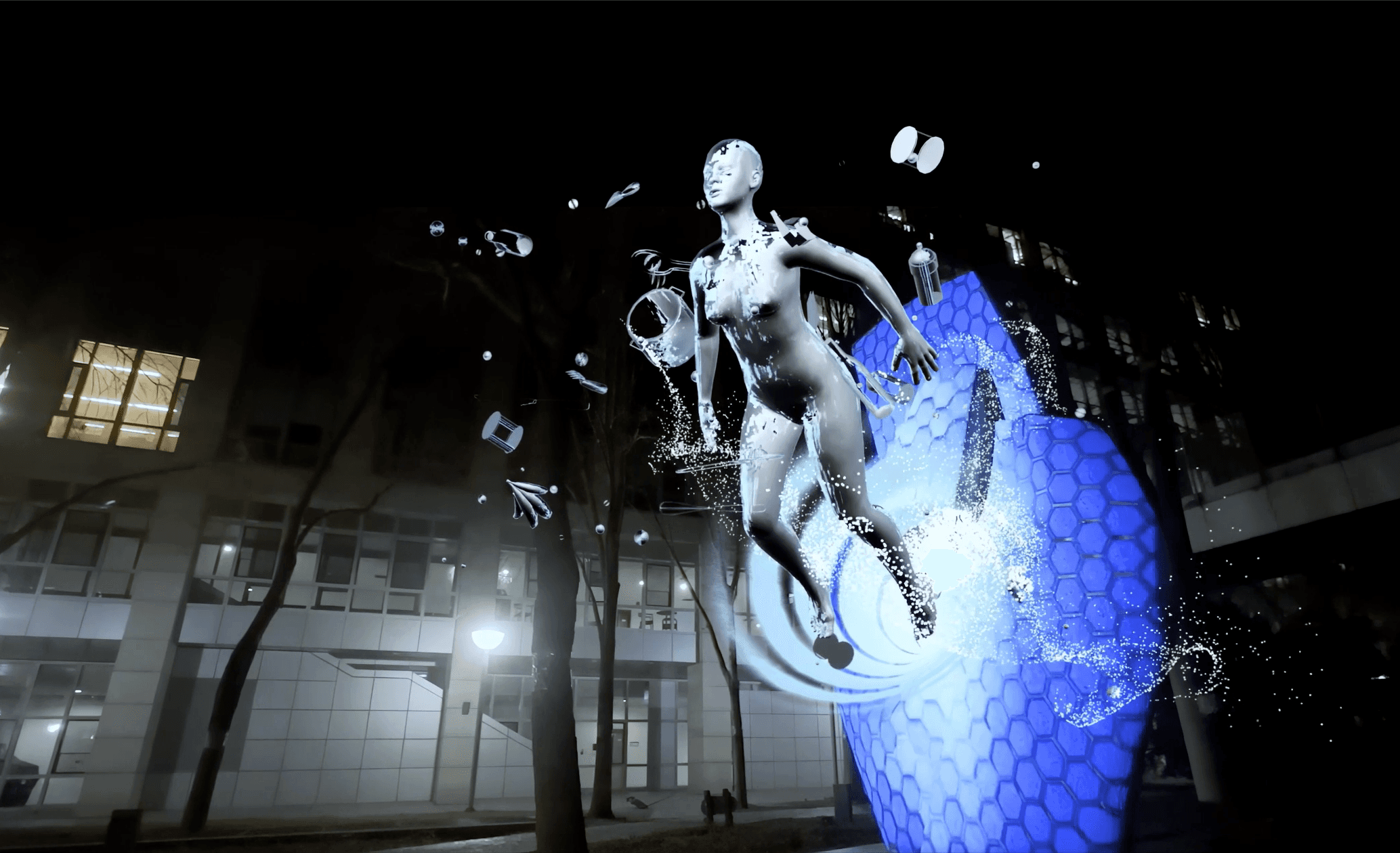
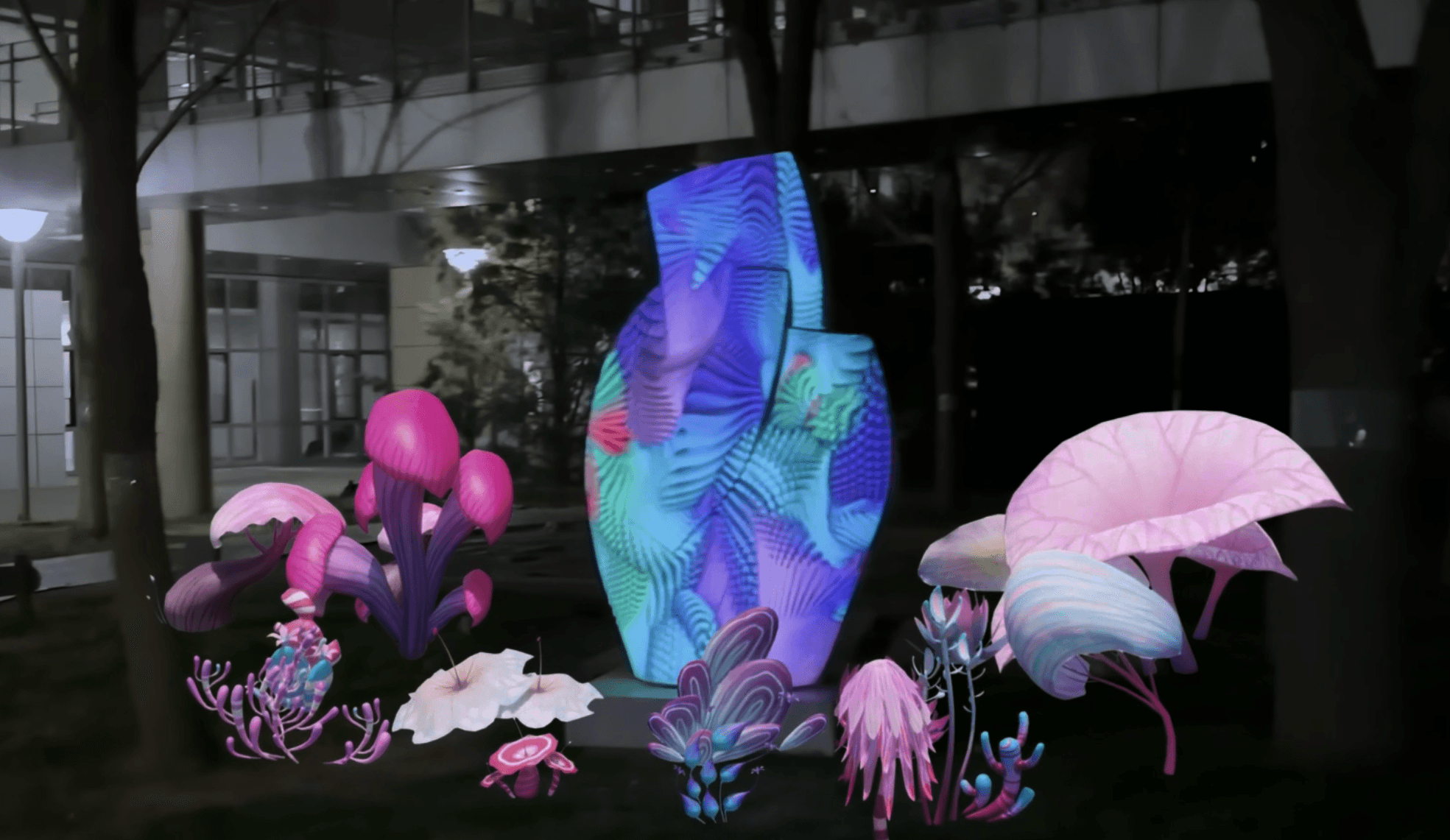
When residents scan the sculpture with their phones, an AR experience is triggered. The theme “Stellar Incubation” draws from space and aerospace imagery frequently mentioned by residents of the Beihang community, symbolizing a collective imagination of exploration and the future. Inspired by participants comparing the sculpture to an “egg,” the AR design features a hexagonal motif—evoking cosmic structure and scientific order. As users scan the sculpture, an AR character hatches from the egg, representing the awakening of life and the start of an unknown journey. “Vital Veins” overlays the sculpture with organic, plant- or coral-like forms, suggesting the rhythm and vitality of an alien lifeform. “Spark Burst” employs a tap-based trigger—when touched, the sculpture releases a burst of particles, echoing the sudden flash of inspiration in the mind.
When residents scan the sculpture with their phones, an AR experience is triggered. The theme “Stellar Incubation” draws from space and aerospace imagery frequently mentioned by residents of the Beihang community, symbolizing a collective imagination of exploration and the future. Inspired by participants comparing the sculpture to an “egg,” the AR design features a hexagonal motif—evoking cosmic structure and scientific order. As users scan the sculpture, an AR character hatches from the egg, representing the awakening of life and the start of an unknown journey. “Vital Veins” overlays the sculpture with organic, plant- or coral-like forms, suggesting the rhythm and vitality of an alien lifeform. “Spark Burst” employs a tap-based trigger—when touched, the sculpture releases a burst of particles, echoing the sudden flash of inspiration in the mind.
When residents scan the sculpture with their phones, an AR experience is triggered. The theme “Stellar Incubation” draws from space and aerospace imagery frequently mentioned by residents of the Beihang community, symbolizing a collective imagination of exploration and the future. Inspired by participants comparing the sculpture to an “egg,” the AR design features a hexagonal motif—evoking cosmic structure and scientific order. As users scan the sculpture, an AR character hatches from the egg, representing the awakening of life and the start of an unknown journey. “Vital Veins” overlays the sculpture with organic, plant- or coral-like forms, suggesting the rhythm and vitality of an alien lifeform. “Spark Burst” employs a tap-based trigger—when touched, the sculpture releases a burst of particles, echoing the sudden flash of inspiration in the mind.
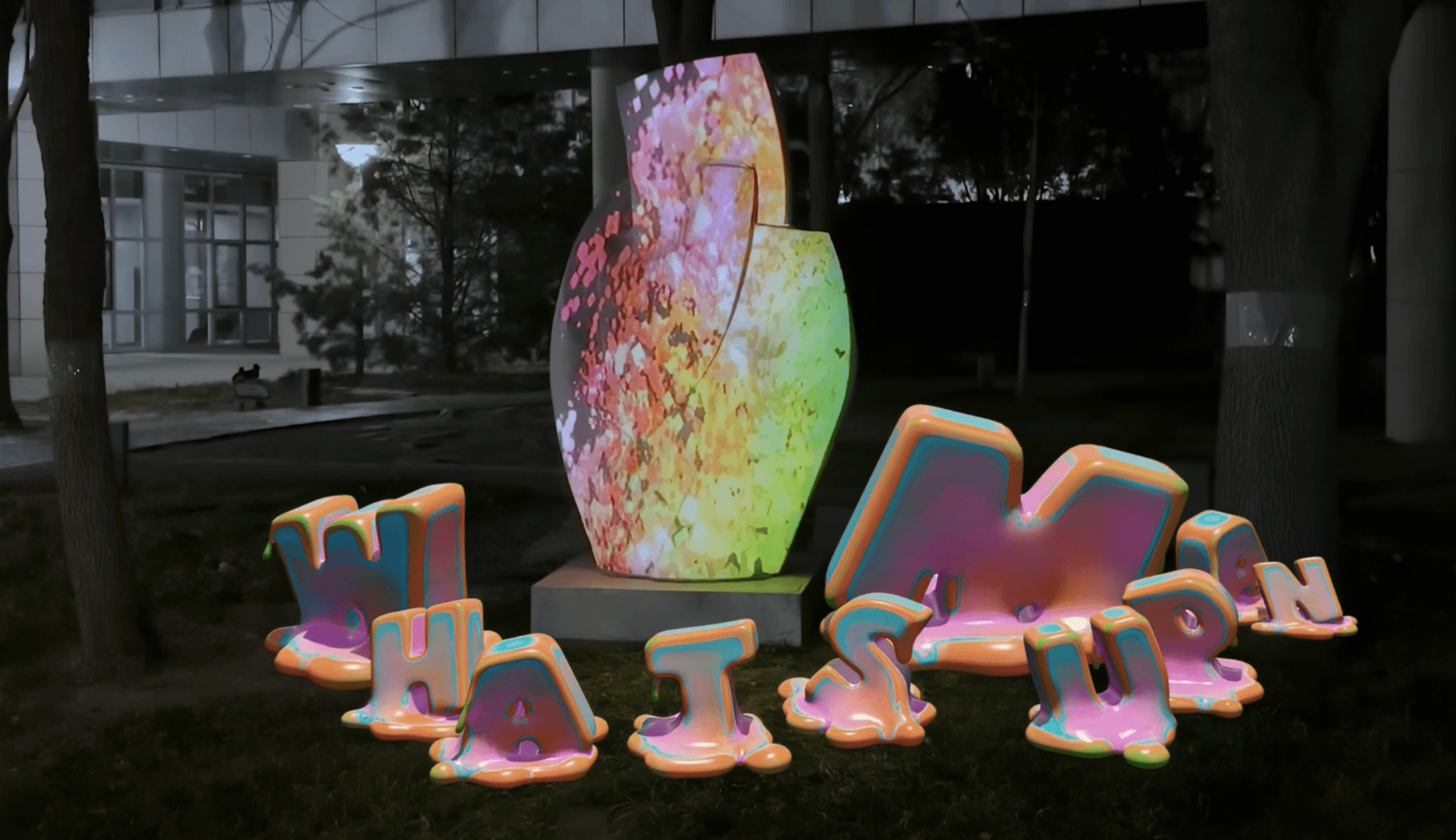
Given the site-specific nature of community public art, the presentation of this project relies on the actual spatial context of the public sculpture to fully demonstrate its interaction with the environment and the audience. You are welcome to view the following video for a more detailed look at the on-site presentation.
Given the site-specific nature of community public art, the presentation of this project relies on the actual spatial context of the public sculpture to fully demonstrate its interaction with the environment and the audience. You are welcome to view the following video for a more detailed look at the on-site presentation.
Given the site-specific nature of community public art, the presentation of this project relies on the actual spatial context of the public sculpture to fully demonstrate its interaction with the environment and the audience. You are welcome to view the following video for a more detailed look at the on-site presentation.